Oct
31
2010

Barcelona. Ravel District. 28 October 2010
Finally arrived in Barcelona a week late. 3 flights to get here and two of them delayed for hours each. Jetlag was thick and heavy. Shaking it off has taken days and part of the process has just been city walking — stopping in cafes to do class work and taking pictures between stops. I especially like walking the districts where the city is unstable and in transitions; where populations are in close proximity and where traditions are reflected on the street not only in traditional dress but also in local groceries, shops and cafes. For the past few days I’ve been photographing the mobile phone stores. These interest me because the phones are often knock-offs of famous brands built for the economics of the 3rd world — I get a bit of an education of available technological abilities in the handsets for the best selling phones in Nigeria and get to see what an 80€ Samsung solar phone looks like. (Seeing these phones also grounds my flights of tech fantasy that eLearning can take place on smart phones — maybe someday, but for now it’s mostly the basics of dumb phones doing the work). I’ve used the images (different ones) for both IDEL and now here for ELDC. Subtitled, some of the pictures are banded with call-outs related to eLearning and v-ethnographies. Here is one of the images in a project called Babel 2.0. 28 October 2010, Ravel District. Barcelona.
Oct
29
2010
V-ethnographic progress report
Where I thought I could separate and distinguish between physical and virtual, in terms of community, I have opened a bottomless pit. Just trying to describe community beyond traditional (and very loose) definitions that function around neighborhood has proven to have spurs and roots that go in every direction. I’ve been working most of the day trying to write an acceptable definition that could oscillate taking in conditions of my v-ethnographic group who works in physical, urban space, as well as the conceptual and physical place of art production and furthermore participates, organizes, communicates with a global “community” of followers, mimickers, collaborators, lurkers, and friends. I’m thinking no version of the word community functions under such conditions.
Why use community in the first place? It’s a conceptual construction with loose pedigree. By using it I’m stuck with its warts, and all previous association. Don’t you think this corrupts ontologically emerging forms such as social media and virtual worlds that only recently entered our consciousness? Furthermore, digital and virtual equipment and worlds are the products of natural forces and chemical bonds assembled and reassembled by conscious minds from numbers extrapolated from nature. Virtual space is a construction with emergent properties, actions that take place there are not like those constituted in a physical community. And, while there is appeal in community’s mom, pie, the flag, hominess, the word community offers no precision from nostalgia and ideologies, even as it is being tasked with defining a new way of being. I think we have been hybridized and thus we are genetically different creatures than our community of ancestors.
Oct
25
2010
Finding a compass bearing this week has been more of a challenge than I expected. Applying even small-scale sections of the readings to a case study I have found difficult. Needing to define “community” I started with a scope too broad and could solved it only by searching for specifics that could apply to my virtual ethnographic subject at a smaller, limited scale; I am continuing to refine and evolve community in various aspects as it may be applied to the overlapping territories and borderlands of analog and digital spaces of urban community and social medial community. And I am thinking that aspects of Transliteracies and the liminal will come forward within the mini-ethnographic study.
Much of the week was spent searching for a subject, following and participating in the conversation on the Hub, checking links suggested there, and inserting myself into the public flows of information and discussion in order to get a “feel” for methods and approaches classmates were looking to and decide if a small study of an organization I’m interested in, Fallen Fruit, was even possible. Early on the biggest obstacle for study was to understand that the group/organization had two important aspects of being — one physical defined by urban actions and the production of art works, the other digital, defined by information flow to collaborators/users, strategic organization, as well as artistic, aesthetic, botanic and social media participation in e-space.
In terms of readings I have said a lot about at “The Virtual Objects of Ethnography” and have created an artifact of sorts consisting of 40 Quotes from Hine as an alt-reading. I intend to use the 40 Quotes book (published for the class at issuu.com/exodesic) in the virtual ethnographic final assignment. It was a way of organizing a collateral methodology that will come into play as production of the work continues. I have even looked at barcode distribution of this artifact and will know more how or if that is working this week.
Oct
23
2010

QR code to issuu.com & 40 Quotes book
PLEASE SCAN WITH MOBILE PHONE TO TEST BOOK DOWNLOADING INTO PHONES. On the iPhone most apps are opening in Safari and it’s difficult to change pages. Android on the Nexus give a full screen book and easy page turning. Scans work from paper prints so this is potentially an interesting way for mobile tech and eLearning distribution.
Use free bar code scanners (iPhone, Android, etc) to directly download this little book to mobile phones. Test. Please let me know if it’s working. Free scanner software at Android Market & AppStore.
Oct
23
2010
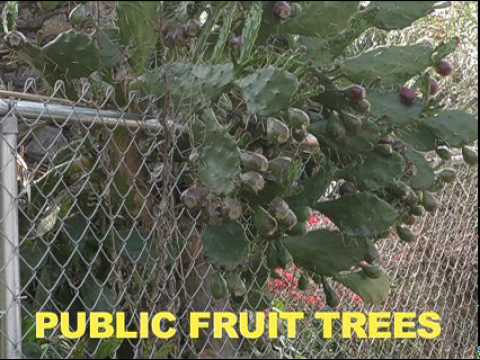
This is one of the important documents for looking at Fallen Fruit’s visualization of urban space through technologies of scaled satellite maps and crossing them with a goal to shift the resolution of city to neighborhoods and from neighborhoods to fruit trees. From Satellite maps to street maps with locations of trees the public can legally harvest, Fallen Fruit understands the city as an organism of which virtual space and inorganic objects are part. One of the stated organizational/group goals is focused on biodiversity viewed through a filter of hunger and abundance and addressed in civic actions, virtual actions, and biological (planting/harvesting) actions. From virtual imaging to virtual distribution of media, the network resolution of digital and analog spaces oscillate to work locally while talking cross-culturally and cross-spatially. The group seem to understand the fluidity of borders and that digital media crosses time and place in one way and physical presence crosses in another — they are symbiotic — virtual social media and physical place. Fallen Fruit organizes gatherings with conversing, Tweeting, FaceBooking for developing plans and community projects as well as thinking/visualizing how they refuse to acknowledge borders of space and technology that normally restrict and hamper neighborhood groups. More on this video later. LACMA = Los Angeles County Museum of Art where Fallen Fruit has organized a large project and celebrates it in early November.
Oct
21
2010
Test 2 • 40 Quotations from Hine as a Virtual Ethnographic Object (maybe)  • Testing the waters here for some of Hine’s actions applied to his text: appropriated text, revisualized as a alternative digital work, and distributed (potentially) as an eBook, pdf, or print-on-demand paperback. (The issue book is suppose to be opening here, not just linked; but I’m not getting the plug-in for issuu to be nice.)
I’ve enjoyed the Hine text and find many parts useful for extension and extrapolation and after collecting and keying so many quotes, I thought they could stand alone. Also thought they could be useful to the group or could be worked on collaboratively — Wiki-Hine or maybe Hine-Wiki  • Anyone can download it from the link below.
Test #2
TEST #1 Fallen Fruit eBook
Oct
21
2010

Fallen Fruit Tweet #1 19/10/10
Following the discussion today on the Hub, I’ve been considering how to define community for an organization that has presence and activities in both digital and analog spaces. I just received this tweet a few minutes ago and seeing the bicycle and apples photo of RL in Tweet space on TweetDeck made me think that what I need to define is not separate communities but how each presence — virtual & physical — mediate, bridge, and merge as hybridized in an ecotone
Oct
19
2010
Digital processing nature
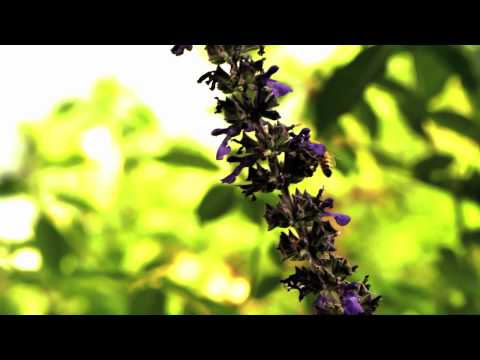
Story at Wired.com
Oct
19
2010


Fallen Fruit Map distributed via web pdf
http://www.fallenfruit.org/
Twitter: @fallenfruit
The map (PDF via website) illustrates not only public access to hidden and found urban fruit trees with encroachments onto public land (thus making the fruit available to public picking), it embeds, advocated involvement in art, urban nature, and networks surrounding public activities, made public via Twitter, FaceBook, and website. Manifested in graphic form, the map suggests a virtual community following the Los Angeles group’s activities (physically and virtually), while also stimulating new local chapters (Colombia, Sweden) of an art centric movement with ecological ethics. I’m thinking the fluidity of open membership, the communication of site-specific activity, and the avocation of street manners and ethics, qualifies Fallen Fruit as a community ripe for a virtual ethnographic study.
Oct
15
2010

manifesTWEETS • Design, Nature / Design as Nature
Follow Twitter = manifesTWEETS
First hearing of the Japanese mobile phone novels a few years ago, and wanting to use cell phones for design work and classes, I began to think about using the more directed, though more restricted format of Tweets for class texts. The intention was not to fully run a class or stand-alone text in Twitter, but to use the Tweets as points of contact, relating back to a fuller suite of apps. The Tweets, could communicate quickly, be collected as a full text on a corresponding site, be linked to discussions, comments, and tutorials while serving as a site for eLearning 3D design and software.
This is the first run — the design tutorials will follow later. Beginning 1 November, for 30 days a design manifesto will be TwitterCast. The Tweets will be collected on a website where animations, like the one above, will be based for each of the 30 points, and eventually linked with drawing and fabrication lessons as they evolve. One of the goals is to test Twitter as part of an eLearning suite of free technologies.


